

CIMAC presents its new website, designed to offer an advanced digital experience tailored to the needs of companies, brands, and professionals operating in the fashion, personal protective equipment, medical devices, and food contact materials sectors.
The project represents a significant evolution compared to the previous platform, transforming the site into a consultancy tool capable of guiding users in their search for laboratory tests, certifications, and technical standards.
What are the EN ISO standards for PPE?
EN ISO standards define the technical requirements and testing methods that personal protective equipment must meet before being placed on the market. Among the most relevant we find:
- EN ISO 20345 → safety footwear
- EN 388 → protective gloves against mechanical risks
- EN 149 → respiratory protective devices
- EN ISO 13688 → general requirements for protective clothing
These standards establish precise criteria for verifying the performance, resistance and safety of products.
Recent Updates: What’s Changed?
In the latest regulatory updates, new requirements have been introduced regarding:
- Greater focus on real-world safety: New versions of the standards require more rigorous testing to simulate real-world conditions.
- More detailed classifications: Risk categories have been expanded to better distinguish protection levels.
- New Test Methods: Laboratory protocols have been updated to ensure greater accuracy in results.
- Greater transparency for consumers: Product information must be clearer and more legible.
Implications for businesses
Regulatory updates entail a series of obligations for companies:
- Adapting products to new standards
- Updating existing certifications
- Technical documentation review
- Performance verification through accredited laboratory tests
Companies that do not comply risk:
- Regulatory non compliance
- Marketing block
- Sanctions
The role of accredited laboratories
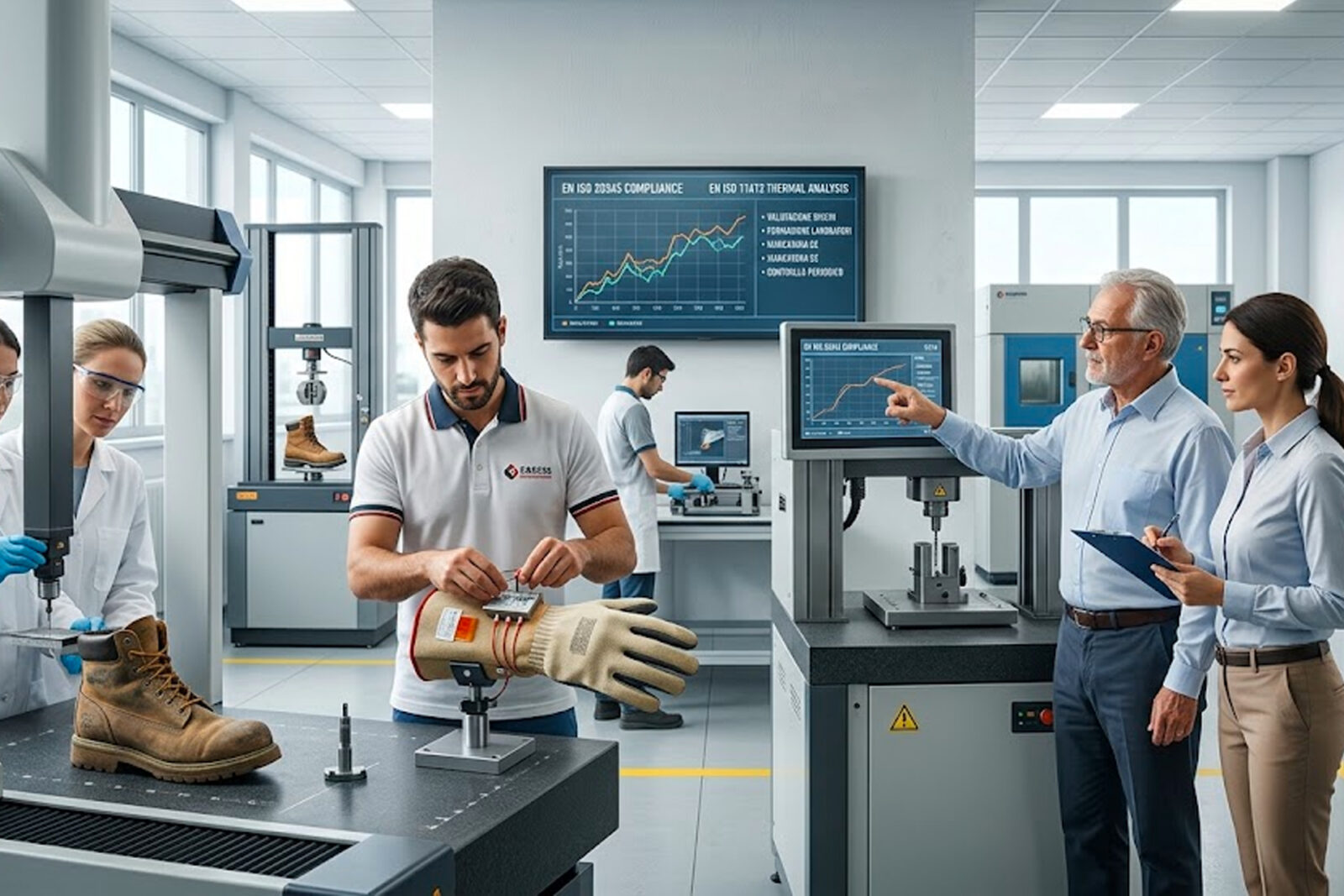
Accredited laboratories play a key role in the PPE certification process.
Through specific tests, it is possible to:
- Verify compliance with EN ISO standards
- Testing endurance, safety and performance
- Obtain European-recognized certifications
Relying on a qualified laboratory allows you to guarantee product quality and speed up the market launch process.
Most requested tests for PPE. Companies primarily require:
- Safety footwear tests: Resistance, slip resistance, impact and puncture protection.
- Glove Testing: Protection against cuts, abrasions and chemicals.
- Testing Masks and Respirators: Filtration, Breathability, and Safety.
- Protective clothing tests: Resistance to heat, chemicals and mechanical stress
Why monitor regulatory updates?
The certification industry is constantly evolving. Monitoring regulations allows you to:
- anticipate market changes
- develop compliant products
- reduce the risks of non-compliance
- improve company competitiveness
Companies that invest in regulatory compliance have a significant competitive advantage.
Why monitor regulatory updates
The future of PPE certifications will be increasingly oriented towards:
- sustainability of materials
- product traceability
- digitalization of certification processes
- integration with increasingly stringent European regulations
This will require increasingly close collaboration between companies and testing laboratories.
Do you need to certify your PPE?
CIMAC supports companies and manufacturers with accredited laboratory tests and compliance checks according to EN ISO standards. Contact the laboratory for technical advice.